A friend called Coco

Christmas Day 2012
Christmas Day 2012

I squinted across the parking lot and sighed, letting the humid breeze blow away the last traces of airplane air. There was no rush, really, no need to dash around, check my watch or even wait closer to Tom so we didn’t lose track of each other in the shuffle while he got the luggage. Because, I reminded myself, down here there was no shuffle, no tight schedules, no worries. There was one runway, an outdoor luggage cart with ours in plain sight ready to grab, and a long, lazy month in a beach house just down the road.

I already knew what to get at the small market on the way to the house, which drawers I’d use to stash my stuff before shoving my suitcase under the bed, how I’d lay my mask and fins out on the porch till morning and my swimsuit in the little wicker chair by the deck. I’d sit in the cabana with my daughter, Becky, on her days off from teaching at the Island School, just exactly as I’d done when I’d stayed there over Christmas. It felt so good to be back, to be waiting outside the airport repeating it all in my mind with calm certainty that nothing had changed a bit. While I’d gone home to three months of Maine freezing and thawing, Rock Sound, Eleuthera, Bahamas, stayed exactly as I’d left it.

When it comes to being on island time, I’m usually there before the plane even lands. I feel the change coming over me like a deep cleansing breath and, as soon as I can swap my L.L. Bean boots for Tevas, I’m back in the groove. But today was different. Today was April 16, 2013, the morning after the Boston Marathon bombings—and by the time I made it through the sentinel of security at Logan Airport, past the “what’s going on in the rest of the world” news coverage in the Nassau departure lounge and, finally, to the remote end of this out island—I felt like I’d escaped much more than mud season in Maine.

Hauling his huge rolling duffel packed with more snorkeling and fishing gear than clothing across the parking lot, my husband, Tom, seemed to agree. He looked up at the palm trees with a weary, but expectant smile that told me he’d reached the leg of the journey when horsing stuff around was no longer a hassle. The exertion was now earning him rum drinks.

“Luggage is all here,” he announced, and I nodded. Despite sharing an adventuresome streak that lands us far and wide, we still find comfort in stating and acknowledging the obvious along the way. I, especially, have a need to repeat things out loud to myself—our flight numbers and gate numbers, our departure and arrival times—re-reading them from the itinerary I keep in a giant paper clip in my carry on, reciting them off the airport monitors, again when we get to each gate and, finally, hopping up and echoing the boarding announcements as they come over the PA system. Fidgeting over the reservations, the little details, then freewheeling how they actually come to pass is, after all, how we manage to venture so far off the Carnival cruise line. Once again, a fine-tuned balance of focus and faith carried us from the JetBlue Airbus 320s, through the bowels of the “domestic” terminal, and on board an island hopper turbo prop, leaving the dolphin encounter brochure families back in Nassau.

We also left behind Comfort Inn, McDonald’s, Verizon wireless, and Hertz Rental Car. I did make arrangements for a car, supposedly, the same one we’d driven back December. But I had no rental contracts, no formal agreements, no guarantees. “This is where the paperwork ends and the trust kicks back in,” I reminded myself. The more I scanned the parking lot for the ancient RAV4 that wasn’t right there waiting for us when we landed, though, the more I wished I could rifle through my clip full of printouts for some verification, something with today’s date on it, something official. Visions of the armed guards and bomb sniffing dogs that surrounded me in Boston crept back to mind, and I couldn’t help voicing how vulnerable I felt standing so far from home, waiting for one man to fulfill his promise: “Where is Coco?” I demanded.

You just couldn’t be in Rock Sound for more than five minutes without seeing Avian Morley, AKA “Coco.” Besides being the go-to guy for transportation, his restaurant/bar/conch stand was the most happening place in town. Heck, even Martha Stewart and her camera crew managed to find him, lured from afar to taste his legendary conch salad. Plus, to me, he was the face of Rock Sound, the essence of what it took to thrive on the sleepy end of this out island. The minute I met him back in December, “gotta see Coco” stopped having much to do with practicality and logistics, and became all about wanting to just be around him. Yup, I told myself, if there was one thing I was pretty sure I could count on in Rock Sound, Eleuthera, on the morning after the Boston bombings, it was finding Coco again.

“Hey, hello and welcome back, dahlin’!” he greeted, coming across the parking lot with car keys and a big bear hug. I was struck again by how much he reminded me of someone I couldn’t quite place. It didn’t matter, though, ’cause I’d found Coco again. And the way his huge, easy smile felt the same as looking out through the clouds from the puddle jumper plane to spot my first glimpse of turquoise water, so vivid but tranquil over the long stretches of white sand, was all I needed to know for now.

“Coco! So good to see you again!” I said. “Hope you didn’t wait here too long. And, oh, we do want the car for four weeks, but our bank back home has a maximum per-day ATM withdrawal, so we’re going to have to pay you cash in several chunks so you don’t get hit with a MasterCard or check cashing fee.” He nodded, smiled, and walked us over to the familiar grey RAV4. “No problem, no problem,” he said.

Classic Coco, I thought, climbing back into the banged up SUV. It was hard to tell if the odometer had moved in the last three months since it was still hovering around 200,000, and we were still too hesitant to do the kilometers-to-miles conversion. “You sure this thing has enough ground clearance to get us down the remote beach roads?” I’d asked the first time we saw the RAV4. According to the Eleuthera travel guides, venturing off the Queen’s Highway to explore could be as risky as it was rewarding, and I found myself remembering how a gorgeous tropical view hadn’t helped Tom Hanks much in Castaway.

“No problem, no problem,” Coco said. “Drive slow.”

Hadn’t I heard that tons of times in my travels! No problem, mon. Usually it came across as the island way of saying there really was a problem, but we want you to calm down, chill out, have another rum drink so you don’t notice. That’s what you tourists expect us to say…pay us to say. When the boat captain on my first trip to the Bahamas told me: “No problem, dahlin’ we go snorkeling today,” it meant even though it was hailing and blowing a gale, I just needed to have another Goombay Smash and get on the boat. Even back home at a local concert hall, I heard the manager for Bob Marley’s sons’ reggae tour say “No problem, we’re on island time,” to the volunteer usher ladies (who seemed all the more perplexed by dreadlocks). I’m pretty sure it meant the musicians chillin’ out in their tour van (right next to the police station) an hour after the concert was supposed to start were not experiencing any hassle.

When Coco said no problem, it was different. His way was like a mantra, half lullaby, half chant, a personal affirmation that “every little ting gonna be alright.” Hearing him repeat it over and over, I could believe and make it my own truth—whether I was bouncing down a jagged road in a rental jalopy, or trusting that he could just shut down his entire restaurant on Christmas Day to invite us and a small gathering of other “locals” to dinner. “No problem, no problem,” he said when Tom got his wallet out and tried to pay for the bottle of wine we drank with our turkey with all the trimmings and fresh banana cream pie. “You’re family now.”

Other vacationers told me they came to Eleuthera for the people, by-passing islands with more amenities, but less soul. That Christmas night, as I watched the annual Junkanoo festival, I understood. The residents from Rock Sound, Tarpum Bay, Governor’s Harbor, and the other communities linked together on their skinny strip of limestone between the Atlantic and the Caribbean were family, parading by in one big celebration of life and tenacity, and I was mesmerized from my eyes down to my swaying torso. The costumes drew me in, colorful and gaudy as the tinsel-covered Christmas trees I’d gawked at as a child. Somehow, too, the drum beat and the rhythm of their age-old dance of joyful defiance filled me reverence, the kind I’d get gazing up at stained glass windows in a candlelit church. The brass section tooted by, keeping it upbeat, and I was whisked out of church, back to the roadside revelry. Had I ever been able to leave that moment in time, rooted there near Rock Sound with my family, I actually could have dreamed I was just a bit off Broadway. Then along came Coco, king of his community’s Junkanoo band, dressed like a Bahamian police constable, dancing with all his might and clowning around for the crowd.

It wasn’t until I got back to Eleuthera in April, and I was sitting in Coco’s restaurant watching his Junkanoo video, that it finally hit me. Big Papi! He was the David Ortiz of Rock Sound, Big Papi without the beard, or the bat, or the big baseball salary. Plus, while he didn’t have the same bling as the Boston Red Sox MVP, he lit up that parade route like a shimmer of diamonds. “Can you please make me a copy of this DVD?” I asked Coco.

“No problem, no problem,” he said. But I never saw it, or Coco, again. Coco died in a motorcycle crash in September, just up the road from his last, jubilant march. I heard the awful news as the fall colors were fading back home in Rangeley, Maine, and the air was taking on a chill that made me dream of dancing barefoot in the Bahamas. I’m no stranger to grief, both the kind that stabs me swiftly in the heart, or drains me slowly like a wound that can’t heal. Still, the loss of Coco stunned me to my core. How could I miss someone so profoundly I was pretty sure I was never going to see again? Now that Becky had finished teaching down there and moved to Boulder, I should have been better soothed by happy memories of time spent with a great guy on a laid-back island. People come and go, after all. And sometimes I’d end up wondering things like “whatever happened to that guy who used to work here….he was nice.” I’d find out he’s not coming back, observe a moment of silence, shrug and move on. Not so with Coco. Not even close.

The night Becky called and told us, Tom and I looked out over our lake and toasted Coco, drinking the special Rangeley Red Juice liqueur Tom made from raspberries we picked in the warm August sun. We wished more than anything that Coco could taste it with us, beaming his approval. We drank to living life in the moment—and to the mixed blessing of having a friend like Coco, now gone, who left a legacy of how we’d treat ourselves and others in his memory.

I cried a lot over Coco. And with Christmas coming around again, I’m sure I’m nowhere near done. I am finding comfort, though, in a picture I keep near my desk. It’s Coco, in his element down by the clear, blue water, palms up and arms spread wide, grabbing all life has to give. He sort of reminds me of the the giant portraits that, as a kid in church, I thought only Christ could pull off. Striking a “come to Jesus pose,” He’d conjure up a powerful spirit vibe I figured must be reserved for the Son of God Himself. As an adult, I now believe the spark comes closer to earth. It moves through people like Coco, who show us how to carry Heaven with us, day by day, in our attitudes. Each time I see his picture, I now also know that it’s my bittersweet burden to always remember, to always radiate how he made me feel—instantly special, a forever friend.

No problem, Coco. No problem.
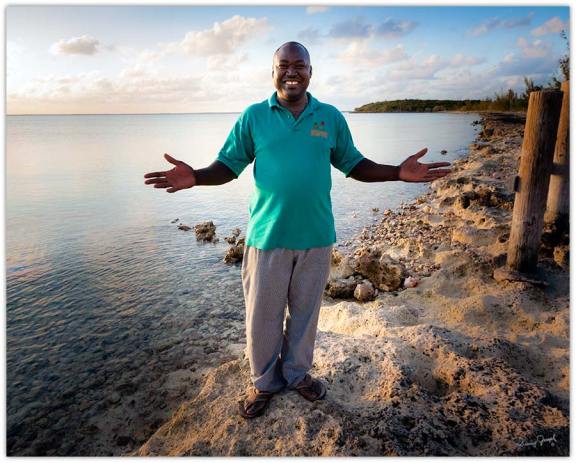
Photo courtesy of Perry Joseph


Just like riding a bike…not!

“It’s just like riding a bike!” With a quick nod and a dismissive hand gesture, this is society’s way of telling us we are “good to go,” that whatever we might be struggling with is doable. And almost everybody hears the breezy little saying the same way.

“Oh, OK then, I got this!” Easy peasy. Piece o’ cake. Not to worry.

Not me. While I have come to understand the gist of the sentiment, I’ve never been able to make a simple translation. I’ve always added my own mental side note: “Easy for almost everybody. A bit of extra work—and maybe some blood, sweat and tears—for me.”

I got my first tricycle when I was five. It was a rugged red and chrome beauty nothing like the plastic Power Wheels of today. My dad brought it home one afternoon, plopped it in the driveway, and said, “There ya go! Have fun.” And, boy, was I planning to…just like Billy next door, and Cindy who lived down by the school and got to race around on the pavement to her heart’s content. I hopped on, ready to ride, but didn’t budge. Unable to push the pedals a full revolution, I just sat there, a coiled ball of “big girl” determination, hoping and grunting, and going nowhere.

The trike went back to the hardware store the next day, and that’s the first time I think it dawned on me I really wasn’t like almost everybody. Oh, I’m sure I knew, deep down, long before. But having no real relativity, no Billys or Cindys in my field of vision yet, I naively went along at my own pace. As a baby, how could I know that dragging orthopedic gear behind me wasn’t the developmental benchmark kind of crawling Dr. Spock had my mother anticipating? And what yardstick could have told me the long expanse between the sofa and my next handhold on the bookshelf was something most toddlers had already walked with brazen confidence?

I was born with a mild case of cerebral palsy. Just a touch. Not enough, thank God, to leave me in a wheelchair or visibly crippled as the diagnosis often implies. But enough to leave me unsteady on my feet, better on one leg than the other, and longing for Keds instead of “special” shoes. In the days before mainstreaming, it was enough to sideline me on every track and field day, to leave me in the bleachers where no one needed to wait for me to catch up, or tell me my two-foot flailing leap across the dirt didn’t qualify as a long jump.

I remember feeling like I’d never take off under my own steam, ditch the training wheels and the worrisome looks, and just fly like the wind. Eventually, though, not so long after my stationary trike trauma, off I went speeding across the school yard on just two wheels, my grandpa doing the “no hands” wave behind me. To this day, with many miles of victory and defeat at my back, the Olympic moment when the pavement rushed beneath me—of seeing my orange tiger handlebar streamers fluttering with every determined push of my pedals—still stands out as my personal best.

“Ramblin’ Rose to Papa Bear. Come in Papa Bear!” Many years later, I was calling from the Oquossoc Grocery, so pleased with myself I used our walkie talkie “handles” to report back home to Tom. I couldn’t use my walkie talkie, I told him, since I was way out of range. I’d just biked 13 miles into town and, after a sandwich and the satisfaction of watching cars go by as I sat at a picnic table drying my sweat-soaked bike helmet hair in the summer sun, I’d make the return trip.

So began my Ramblin’ Rose years when, in my late thirties, I finally figured out ways to use “favorite” and “exercise” in the same sentence. I had two: snorkeling and mountain biking. The first felt so free and graceful I wanted to grow a mermaid tail, but required a plane ticket to the tropics. The second felt gnarly and gritty, never floaty, but was right in my back yard. So, most days, biking was a no-brainer. Using the legs God gave me to propel myself through the mountain biking mecca of western Maine was a matter of natural selection more than natural ability. And, most days, it was better for my body than other choices such as aerobics, especially my metatarsals and menisci, which barely survived my attempts to join the Jane Fonda craze. It certainly was better for my ego, safety, and sanity than skiing. And running? Well that, or my form of it, was something I rarely attempted—reserved primarily for snake sightings and general admission into a U2 concert.

Hard as I tried, though, practice never made biking smooth going. It wasn’t something I returned to effortlessly 20 years after parking the old Schwinn five-speed I used as a teenager when I couldn’t get a ride somewhere. Getting back on the seat took guts, gumption, and overcoming the agony of letting my daughters see that, for their mom, the old “just like riding a bike” saying wasn’t true. Any sort of fluidity in motion required a finely tweaked head start and attention to detail en-route: 1) Carefully swing my “bad” leg up (and especially over) the bike frame and hop on. 2 ) Get my “good” foot cranking. 3) Throw my other one onto the opposite pedal. 4) Hang on, pedal like crazy, and enjoy the ride. 4) When done, dismount without keeling over (See step 1). Thankfully, my mastery was rewarded with many, many family bike trips, even more solo excursions, and surprisingly few dumps or crashes. I celebrated turning 40 with a 40-mile round trip ride to Rangeley and back with Helen, then 13, proudly setting the pace. And, by age 45, I even managed to look my personal best in the black Spandex bike shorts and red rose emblazoned jacket Tom bought for that birthday.

Not long into my 50s though, things changed. I let my bike gather more garage dust than road dirt. I traded my daily rides for walks, and took my biking indoors to the gym. I began to suffer more and more from what a healing friend compassionately called “gravitational insecurity.” Age, loss of flexibility, and being thrown off center by life’s hazards left me more finicky than ever about how I chose to “get out there” without getting hurt. I stayed in shape, wearing out more than a few pair of sneakers and, occasionally, strapping on snow shoes. But I longed for the freedom of the open road, the exhilaration of pushing myself past my own backyard.

“Trust me. I got you and I’m not letting go till you feel safe again,” Tom promised many summers ago. I was on my bike again for the first time in so long I needed him to hold onto my seat and follow me up the driveway like my grandpa did 50 years ago. Eventually I did let him let go. And I did get the hang of the whole pedaling and balancing thing enough for us to take a short ride together. But I was shaking when I got back home, so unsteady that I found the excursion more terrifying than invigorating. “Yeah, right…just like riding a bicycle,” I muttered and hobbled off, leaving it in the driveway. At 57, I was learning the difference between blindly attempting what I should be able to do with my slight disability, and how far I could safely push myself toward what I genuinely wanted to do. Still, retreating to my Adirondack chair for the rest of the afternoon, I felt my limitations closing in on me.

I went back to walking and waiting for my next snorkel vacation. I told myself I’d just have to be OK with enjoying life in prime biking country on foot. And then, just as August gave way to the clear, crisp perfection of September in Maine, I had a knowing so strong it woke me from my trance. “But I want to ride a bike!” I said. “I really, really do!” I wanted to claim the trail on my own terms, and I wasn’t ready to pack it in and park myself on an ATV like so many of my rural neighbors. But what, exactly, did that look like? How could I regain the joy of grinding up the gravel, of gliding past woods and water, while nurturing myself and my needs? I Googled “adult mountain bike training wheels” without much success. I scrolled through online pictures of three-wheelers more suited to retirement communities than God’s country. Then I decided to swallow my pride over “giving up on myself” and ask Tom what he thought.

He didn’t laugh or even smirk and, in the blink of an eye, had me looking at the answer. It was a recumbent tricycle, a TerraTrike Rover to be exact, and he knew this because his traditional bike was bothering his lower back and straining his wrists and he wanted one too! The trikes would take a little getting used to, pedaling from a different angle and all, but they couldn’t fall over and would keep our legs and core in great shape while we laid back and enjoyed the scenery. A few weeks and a trip down the mountain later, and our twin TerraTrike Rover recumbent trikes waited side-by-side in the driveway.

“Sweet ride,” Becky said. She’d been my other biking buddy since way back, and was glad to see me ready to roll again. And I was ready, or so I thought, as I sat down and attempted to take off. But I only made it a couple tire spins up the driveway before the reptilian part of my brain stopped me short. “Woah….definitely not just like riding a bike,” I realized, attempting to regain my old center of gravity and gain some ground with my new age set of wheels. “I can’t!” I said, trying not to notice the disappointment on Tom’s face as he sat watching. Even though flipping the trike was technically nearly impossible, every fiber in my being swore I was going to fall over and never get up!

But Becky, bless her, wasn’t about to let me slump back to my Adirondack chair in defeat. An Outward Bound instructor, she is gifted with helping others dig deep, push through pain, and discover their core strengths. “You’re not going to fall over, Mom, you can’t!” she yelled in her tough love voice, hip-checking my handle bars and fender over and over till she convinced me. Then she helped me practice how to pedal, how to turn, how to stop and start. And, finally, I was off, leaving her in a puff of road dust, squinting behind me.

As it turned out, learning to ride my second tricycle was no more second nature for me than trying to ride my first. But as I heard my daughter’s victory whoop fading in the distance and sped off to catch up with my Papa Bear, I knew it was worth every ounce of extra effort. No, I certainly was not like almost everybody, rambling along at my own pace on my new TerraTrike Rover, the road wide open in front of me.

My Mom’s special because…..

“For you, Mumma,” said Becky. It was almost Mother’s Day circa 1991 and she’d just finished her first “uptah camp” breakfast of the season: a Pop Tart skillfully warmed in the toaster oven, our favorite appliance, and handed to her on a paper plate by her big sister. She placed before me a handmade gift which, as usual, was a cross between art and nature and full of kid folklore. This offering was a human image, hand-carved onto glistening paper in shades of neon.

Ooooh, it’s nice honey! Who is it?” I had to ask.

“It’s you Mumma, you in your bathrobe. Happy Mother’s Day!” How could I not have known? The pointy little head atop the pear-shaped silhouette fringed with hair spikes. The zipper extending all the way down to the crow-like feet. Nobody, not even myself, could ever see me for who I am like my family.

A year or two later, our local paper began running short stories entitled “My Mom” submitted by school children. I remember reading with amusement (and trepidation) some of the sentiments the little nippers thought proper to fit into three or four sentences:

“My Mom has curly hair and green eyes like mine. She works in an office. She likes ice cream.”

“My Mom used to clean house a lot, but now ladies come in a special truck and do it for her.”

“My Mom is a nurse and she takes care of sick people. I am proud of my Mom. Sometimes she gets grouchy around suppertime. She works real hard and needs help. Her hair was gray until she turned it back to brown.”

That was the year Becky’s kindergarten did a similar synopsis, published on a huge scroll of craft paper. “What does your Mom do?” the teacher wrote at the top. The list she transcribed in huge magic marker letters ranged from little kid stream of consciousness drivel about their maternal care givers to the generic “My mom cooks, vacuums and watches Oprah Winfrey.” Somewhere along in the middle was Becky’s response: “My mom goes to Hannaford and types on the computer.” (My circa 1993 priorities in a nutshell, and in the right order, too.) Yup, and in between all that shopping and word crunching, I managed to slap together a few thousand sandwiches, watched her stage debut as a raccoon, and had the alphabet song emblazoned across my brain.

“What would you write about your mother for the newspaper?” I asked Helen. I figured, at age nine, her seniority would afford greater depth of vision.

“Hmmm…I’d write that you love camp, and Dad, and us, and Eric Clapton, but you hate Easter grass…and that you have exactly the same color eyes as mine, only redder.”

So much for aged wisdom! “Nobody has asked you to write anything for the newspaper, have they honey?” I asked, suddenly deciding that was the year I’d settle for magic marker immortalization and hope the media would not be interviewing my offspring. She’d given me my day in the spotlight though when, at age 5, Helen used all her crayons to win the Mother’s Day art contest sponsored by (you guessed it) Hannaford. “My Mom is special because she cares so much about me” it proclaimed to all ‘neath a butterfly-adorned rainbow. No Mommy stick figure to further distinguish me that year, just a short, sweet, primary-colored sentiment posted in the window above checkout aisle 3. And that, plus the $100 grocery gift certificate, was as good as it got back in 1988. Course that was BC (Before Computers), way before I could snap a pic with a smart phone and broadcast my celebrity status to everyone drawing breath. And my babies couldn’t begin texting me as soon as they got manual dexterity and an unlimited family roaming plan either. We didn’t have the wherewithal to universally “like” our kids, to plaster their Facebook walls with little heart emoticons, or to instantaneously show how smiley-faced we were over their ability to share a perfect digital rose postcard with us and 65,312 other one-of-a-kind, “truly soul inspiring” Moms. Back then we had local papers capturing middle class motherhood small-town-America-style, and TV commercials showing kids what they should buy at JC Penney to make Mom look extra special when they took her to dinner at Friendly’s. But, even back in 1988 BC, I do remember attaining some notoriety with my own low-tech social media campaign. “My daughter drew that,” I’d point out to any shopper who happened to wheel past checkout aisle 3. “For me.”

It’s antique artwork now, preserved, framed and hanging above the desk in the upstairs hallway where I store my other Mumma memorabilia. There’s a folder of handmade cards in the top drawer that still gets my attention, even if I’m only rooting around for a pencil. Stuffed full of toddler scrawls, sophisticated custom hallmarks, and everything in between, it holds my personal dog-eared history as seen by my next of kin. Looking back through it all now, I’m glad my daughters took notes, reporting without censure and with a flair for vivid color. Over time, their Mother’s Day messages tracked who I was, how I hoped to be seen, and where I was in my work/life balance spectrum.

“Happy Mother’s Day to the best darn technical writer in the world!” Becky wished me circa 1998 with a creation she printed off our state of the art 300 DPI color printer. It featured a clip art rendition of me, lounging on the beach, snorkel in one hand and pina colada in the other, enjoying the fruits of my new profession with a family vacation. At the time, I remember feeling equally as proud that she put “happy mother” and “technical writer” in the same sentence as I was of the fact that she’d mastered PowerPoint and fancy fonts in the limited time I allowed her to boot me off the home PC.

“Here’s so you can spend Mother’s Day with your favorite people!” Helen proclaimed artfully in another memorable Mumma folder moment. It was during my Mustang years and, with just a bit of help from PhotoShop, she’d morphed our extended family (here and long gone) into my new red convertible along with me and Bono from U2.

After reaching that high-tech pinnacle, the girls’ greetings gravitated away from glitz and back to homespun, to simpler pictorial essays about being my grown-up daughters. Some were spoken, some printed on PostIt notes, some filled all available space in the “blank inside” store bought cards. Each told a tale of love and support, of silliness and adventure, of my special brand of mothering. And the best ones—the ones that said it all—were just words whispered, from younger women to their older one. 

“I think you’re beautiful, Mumma,” Becky said softly. We were sitting side by side on the couch the other night and I’d just made one of my more candid body image confessions. I had to laugh at myself and the fact that, after all these years and all her heart-felt affirmations, most days I still couldn’t bring myself to agree. While I’m glad her image of me progressed from those early zipper-bodied, crow-footed impressions she had when she was four, I still need her mirror to show me at my best—to convince me I’m less Dilbert caricature and more classic da Vinci.

It’s been 30 years now since I received my first Mother’s Day card. It was from Tom, who promised me he couldn’t imagine anyone else being the mother of his children. I remember resting the card atop my hugely pregnant belly, crying a few estrogen-fueled tears, and imagining that maybe, hopefully, he was right. And now, thanks to Crayola, HP, and my two lifelong travel correspondents, I have plenty of evidence.

Happy Mother’s Day!

——————————————————————————————-

For more Mother’s Day messages, see:

The Beagle Loser

“Let’s get you on that scale, Toby!” she ordered.

Suddenly, the room filled with as much drama as could be mustered on a March morning in Rumford. Tom and I held our breath, waiting with hopeful trepidation. Watching the flashing electronic numbers climb, then dip, then soar again was like a moment straight out of my favorite TV show. Except there was no music building to a suspenseful crescendo, no Alison Sweeney in a tight dress and high heels wishing Toby luck (and making Tom wish for things he couldn’t have). And there was definitely no Dolvett the trainer waiting in the wings in Spandex, flexing his biceps and flashing his Hollywood smile.

“Thirty-eight point six,” she announced when the numbers finally stopped. “Toby’s gained over seven pounds!” Tom and I did a classic “agony of defeat” expression just like on the show, jaws dropped, shoulders slumped. But teammate Toby just whined a bit and waddled away. Nope, he was not The Biggest Loser and probably wouldn’t be for a very long time. He was an old, fat beagle, plain and simple. And that verdict was about to be unceremoniously verified by Dr. Kent during the dog’s annual day of reckoning at the Countryside Animal Hospital.

For the first time, Dr. Kent’s assistant had to use caution when hoisting Toby onto the exam table, lifting with her knees not her back so they could proceed to prod the hound’s expanding girth. Toby just tried to maintain his footing and a scrap of his dignity, too complaisant to put up a fuss, and much too simple to remember what happened on that cold, hard table last time he was there. A year ago, after an eye-popping search for his prolapsed prostate, the vet recommended neutering. “Plus, while I got him under I should really yank a bunch of those rotten teeth, too,” he said.

“Guess the poor dog needs help on both ends,” I agreed. “And whatever you do, don’t let us leave without a refill for his phenobarbital. Wouldn’t want to be back up in Rangeley and have him start seizing again!”

Seizures, we’ve discovered, are a beagle thing—almost as common in the breed as their unbridled urge to eat until they pop. Luckily, Toby’s seizures are kept under control with Phenobarbital and, luckily, he is the only family member on meds. Preventing his little brain from misfiring means administering small doses of a controlled substance twice a day,  blood tests once a year to check for side effects, and stockpiling a steady stash for him up in the woods an hour away from the nearest pharmacy. I’m pretty sure drug cartels are masterminded with less planning than scoring Toby’s pills!

“We’re hoping the poor guy’s liver isn’t shot from the medication,” I told Dr. Kent as he continued to poke and palpitate. “Seems like it’s distended. And his hind end is starting to give out a little. He can barely hold his tail up anymore. I read that was a side effect, too.”

The vet cast us a knowing smile. He was no stranger to old dog owner denial, and ours was a classic case. “This dog’s just fat,” he chuckled. “He’s getting old and he’s eating way more than he needs.” No liver problems. No masses. Just beagle blubber. Turns out that two cups of Purina is an excessive amount of dog chow, especially if the cup measure is an ancient oversized coffee mug, and the dog who’s chowin’ on it is devoid of metabolism-boosting testosterone. Plus the real Catch 22, according to Dr. Kent, is the poor pooch can’t exercise because he can’t exercise. Increased poundage stresses his joints making him unable to walk much faster than a turtle, which results in—you guessed it—increased poundage.

“It’s official, Toby,” Tom announced as we loaded our lard hound into the Subaru and headed back up Route 17. “You’re on a strict diet.” Toby just wagged his tail as best he could and stared out the window, oblivious. The reality of his new regimen would not start to sink in (if anything ever really sinks in) until later. His ritualistic dinnertime prance around the pantry would be rewarded with one measly scoop out of the food bucket and, a few gulps later, he’d be dumbfounded worse than ever as he stared into his empty bowl.

That was over a month ago. And while Toby isn’t saying much, we think it’s slowly starting to dawn on him like an overcast morning over a very shallow pond: his two-scoop days are over. Getting a peanut butter chaser to make his Phenobarb slide down easier is a thing of the past, too. And, instead of pre-washing every dish before it goes into the dishwasher, he’s now left standing in the kitchen, watching me with sad, gravy-colored eyes as I rinse the dishes myself, and his favorite bad habit trickles down the drain. It’s hard, we imagine, being on a doggie diet. He’s got no Dr. Phil or Dr. Oz, no buddy system or online support. He can’t “go out and do something special for himself” because he’s been good all week. He can only go along with the program, his unconditional love for us—his food dis-ablers—still somehow compensating for the growling in his stomach. In many ways, though, he’s got it easy. He has no dilemmas about working healthier eating habits into his lifestyle, no worries about midnight binges, no choice whatsoever in whether he’s going to slip up and put the food bag back on big time. And, best of all, Toby’s got company. So as to not follow in his fat footsteps, Toby’s brother, Kineo, is cutting back too. (He’s still young and pretty trim but, hey, he’s named after a rugged mountain on Moosehead Lake and can’t just be letting himself cave in.)

Toby Tubbette. Mr. Pin Head. Little Fat Boy. Sausage Pooch. Beagle Bongo Belly. As Toby looks less and less like a circus balloon dog stuck too long atop the air tank, our pet names for him will most likely change. But, for now, we’re just glad he stopped walking like Eeyore from Winnie the Pooh while his brother gallops ahead, and that even his “erect tail dysfunction” is going away. Course we won’t get the official weigh-in till next March when we go back down the mountain for blood tests and another drug run. Meanwhile, Tom got an interim progress report the other day when he couldn’t help sneaking a peek on the bathroom scale. “Toby’s lost three pounds already,” he announced after weighing himself, then hopping on while holding onto Toby. Good thing for our beagle loser it wasn’t me getting on the scale with him! Then I’d be dropping pounds, but the numbers wouldn’t even budge for poor starving Toby Tubbette!

Working out….and up…and all over

My closer-to-the-city self used to think that working out meant getting in my car and then going inside. I’d drive over to Planet Fitness and schlep around from one piece of equipment to another, relying on the screaming yellow and purple color scheme and the gargantuan thumbs-up logo to make me want to jump on and go like hell. On good days, I’d  burn 283 calories while finding muscle groups I never knew I had, and watching Dr. Oz cure things I hoped I’d never get. Other days, not so much. If I timed it wrong, the TVs strung over the elliptical would be broadcasting soap operas or golf, leaving me staring out  the window at the parking lot, shuffling in place and feeling slovenly. Then, on May 5, 2010, I  shook up my fitness routine and thrust it into overdrive. “I’m moving to Rangeley!” I told the hello/buh-bye girl at the front desk as I shouldered my gym bag one last time. She shrugged, slid me some paperwork, and punched me out of the computer forever.

I found the Planet Fitness paperwork stuffed under some musty socks when I went to re-purpose my gym bag months later. Deep into my first Rangeley winter, I had to chuckle at my signature and all the fine print above it that placed me on my own—outside the “Judgement Free Zone.” I’d officially attested that, yes, I believed whatever new planet I was bound for would offer me a better deal for staying in some kind of shape than $10 a month.

But I was making that happen, I realized. With a bit of ingenuity and a lot more footwear, I’d learned it was possible to keep vertical, keep moving forward, and stay one step ahead of the potluck suppers and wild blueberry pancakes. I’d also learned that an extra canvas bag would be much more useful for lugging mail out of the post office or old magazines to friends than gym clothes.

As I said back in Homebody Building,  I am aware that Rangeley has the best health club ever seen in this neck of the woods. And I agree with my in-town friends—the view from there is spectacular. But I prefer to enjoy it from the back lawn, outside the building, especially when our local clinic brings up the Doobie Brothers and other bands to put on a benefit concert there. While I do miss the social aspects of club membership, I politely decline going inside to join up. I’ve done the math several times and 40 miles round trip to walk on the treadmill or splash around in the pool takes the wind right out of my sails before I even think about throwing my gym bag back into the Subaru. So I settle for sticking to my “at home” routine, substituting the extra car travel with just “getting out there” under my own steam. I may not be able to socialize in my sweats or ask my girlfriends what’s up while we’re getting pumped for water aerobics. But where else can I do the “road wave” to any neighbor who might pass by on my fitness circuit?

This time of year, with only a few of us non-summer stragglers left in my neighborhood, the road wave becomes less and less necessary. And, when it’s snowing again and still blowing a gale,  getting out there is more about blowing the dust off, keeping the shack nasties at bay, and choosing direct contact with the elements over DirecTV. My daily formula for not “letting myself go” 100% dormant becomes 99% stubborn commitment, 1% motivation.

“I’m going out there!” I declare from my back door, wearing my Elmer Fudd hat and layer upon layer of wind and water resistance. “And, dammit, I’m staying out there at least as long as it took me to get all dressed up to do it!” Most days I fit in a decent routine, solo or with Tom and the beagles. My Stair Master is now a hill across the road, my elliptical a pair of snowshoes and poles, and my view far more inspirational than a parking lot or even Dr. Oz. And although I don’t have any fancy equipment or giant thumbs-up (except those I give myself), I have managed to stay in stride with the latest fitness trends. Here’s how:

  • 10,000 steps: I don’t own a pedometer, but figure I get pretty close to 10,000 steps on my jaunts. And I’d bet anything some of my steps pack more of a punch than strolling around the mall. To those who do happen to drive by and notice, I’m the “seen you out walking” woman, hoofing it all the way to Bemis and back in all manner of conditions. In winter, that means stepping out with ice grippers strapped to my heavy snow boots—not the Yaktrax I raved about two years ago. Those were OK to keep in the car in case a stretch of pavement got a bit slickery. But negotiating the luge track formerly known as my camp road has forced me to permanently graduate to serious toothy, muckle-on-for-dear-life cleats. They’re my Rangeley “shape up” shoes on steroids. Once the snow and slush builds up under those babies, my calves think they’re jogging in deep sand on a beach somewhere until my frozen head tells them otherwise.
  • Circuit training: Back at Planet Fitness, there was a special circle of equipment that guaranteed to work out every muscle group in about half an hour. On really good days, I’d make my way around the circuit before moving on to Dr. Oz and the elliptical. I liked knowing that, unlike shuffling in place, the circuit exercises had a beginning and an end. If I made it all the way around to #10, the ab cruncher machine, I’d won. I’d done all the reps and pretended I might be able to hone a six pack. Out here, though, “circuit” training is not about machinery, but common sense and the laws of locomotion. It means ” If I go over there, or through this, or across that, I gotta come back.” And I gotta make it before dark and before the weather changes, or both. Whether I’m out on the lake or up the hill, the circuitous principle is a powerful distinction from any indoor regimen since I typically launch forth with considerable more vigor than I can muster on my return. My last snow shoeing trek was a prime example. I strode, hell bent and full speed ahead all the way across the ice to Toothaker Island—just me and my spring fever out there under the bright blue sky. But when I turned around to head home, my tracks stretched twice as far in the distance as the steps I had taken to get over there, I swear. I figured 3,000 going and at least 7,000 coming back!
  • Yoga/Tai Chi/and other meditative motions: My yoga mat has gathered a bit of dust in recent years, I’ll admit. But I still remember the moves, and I still seek the mind-body connection that comes from thoughtful appreciation of being immersed in nature, moving to the rhythm of creation. This time of year, that often starts with my version of “downward dog” as I jackknife myself to cinch up my snowshoe straps. Some days, I manage to rise up and perform many “sun salutations” and only a few gravity-defying contortions. Other days—after a poorly executed Tai Chi maneuver to shake snow off one shoe, or a misstep into some great white abyss—I add in more deep meditative moments. “Focus on your breath,” I tell myself, my face two inches from the snow, one leg buried, and the other skewed around next to my elbow. “Just let your body sink, relax into it. Deep cleansing breaths, in…and out. Good! Remember, you have the control, the innate strength—to bend, to stand, to step into your power always!” On good days, the mantra works.
  • CrossFit/core training: It’s all the rage, I know. Confuse my muscles and jump start my metabolism with a rapid fire sequence of burning and straining. I’ve got it covered, Rangeley-style, with a custom workout as second nature as brushing my teeth. I call it the seasonal “backwards recumbent stretch, sit and shake” and it goes like this: Open the door to the Subaru, keeping your arms extended all the way out. Maintain as much distance as possible from the covering of road slime on the apparatus as you angle your gluteus maximus toward the seat. While still holding the door firmly with one hand,  sit down, but make sure you keep both legs fully extended, toes pointed outside the car. Clap your legs together firmly several times. When your boots are free of mud and slush, swivel your legs in and close the door. Repeat as needed—at the post office, the IGA, and all around the loop. If done correctly, you’ll feel it in your shoulders, your calves, and especially your core.


Staying past September

“Dock’s out,” Tom announced. “Boat’s out, too.”

“Yup, I know,” I said, even though I was pretty sure he knew I knew ’cause he saw me watching the whole process from my “office” window.

Out here, stating the obvious is expected. It’s a rite of passage, our way of keeping in touch with our surroundings and in synch with the seasons while keeping our vocal chords limbered up. And the longer we live here year-round, the more necessary it becomes.

“Wind’s come up,” one of us will report at least once a day, usually right after a stiff breeze has nearly blown both our hats off. “Yup,” the other will agree. “Lake’s gettin’ choppy.”

Casual listeners (if we had any besides the beagles) might say we sound like we should live closer to town or, heaven forbid, like retired folks. But I’m glad to be right here, watching ourselves move past summer and into another fall, sharing eye-witness reports.

Not too long ago, what went on “up here” this time of year was a hypothesis, a big grey question mark. We crammed as much Rangeley life as possible between Mother’s Day and Labor Day and, most years, even squeezed in Columbus Day. But try as we might to prolong every moment, the days between having summer sprawled before us like an open-ended promise and heading back home were like a screen door on a short, tight spring. I’d barely be unpacked, just about settling in, when zing… BAM! Suddenly it was time to stuff all my canned goods into an ancient Seagram’s box and lug it back down the mountain for the winter. We’d be away then until ice-out, home but not really home, pondering how things were surviving without us “up to camp.”

“Jeez, I bet it’s pretty barren up there right about now!” I’d muse from my other kitchen sometime mid-November. Munching on limp, sawdust-flavored graham crackers pulled from my Seagram’s box of “camp stuff,” I’d be dreaming of s’mores in July. With no year-round Rangeley relativity, my off-season imagination was filled with such conjecture, and enough cold-weather adjectives to convince myself I wasn’t missing much. Part of me knew the leaves fell, the loons left and came back, and the land critters tromped through the snow until April. But, without being right there to watch, it was all just a big theory.

Each year, when the calendar pages of our other life finally wound back around to May, we switched into “going back up” gear. “You start putting stuff away, while I turn the electricity on, get the water going. Then, I’ll go down front, check the lake level, see if there’s any trees down. Maybe tomorrow, we can get over to the building supply, get those parts to fix the dock so we can put that back in.” We’d pile out of the Subaru and scatter like squirrels, a flurry of divergent activities fueled by the common purpose of getting going with summer. Our agenda was long-winded and multi-directional—pulling us around, under, over and through—allowing us to pause for a couple tranquil breaths before driving away until the next time.

Now that we stay put, our sentences are shorter, our movements slower, taking us just a few steps off center. No more hypotheses. No more figuring that whatever goes on past September, it must be dark and pretty dreary just to console ourselves. Truth is, the loons take their sweet time about leaving the lake, gathering in long, farewell dances on the cooling water until they’re ready for their journey. And yes, the leaves do fall off the trees, sometimes one by one. Before they do the birches hold on a long while against the blue of the bare mountains, their last flashes of gold no less gorgeous than the first wild flowers blooming along banks of just-melted snow. Then, there’s a pre-winter pause when the naked branches stand in contrast to the evergreens, mottling the hillsides with warm magenta and pewter. Who knew? Now I do. Being here, with Tom as my co-anchor, I know colors change and weather patterns come and go, not necessary on schedule with calendar days or vacation allowances. I’m now at leisure to flow with it, my rhythm no longer set from knowing “time is wasting,” or my “time off” is short, but by knowing it’s time. Time for stopping, for starting up again, for pausing along the way.

“Outdoor chairs are back in the garage,” Tom announced the other day.

“Yup,” I acknowledged, even though I knew he saw me watching him trudge by. Bearing witness to the Adirondack chairs’ departure from our waterfront till May, I was glad to see it looked like a natural migration rather than a funeral march as in years past. I waved and smiled, knowing that, moments earlier, I’d been sitting in one of those summer chairs, watching the last leaves fall and the loons gather, long past September.

A friend indeed

Would I think she was crazy, my friend Lisa wondered, if she came to visit me from her in- law’s place Down East and then drove back to her folks in Connecticut by way of Keene, NH, before flying home to Ohio? Yeah, kinda, I thought. But at least she’d be a good crazy—a sweet old Nana crazy—not the kind that makes you stand at the end of your driveway wearing a tin foil hat and barking at the moon.

Once she got here Rangeley would, of course, be worth going way the heck out of her way. But she’d soon find out that coming “up the mountain” and over to my side of the lake would be more of an adventure than her average drive in the country. It would take more than a quick peek at the Maine Atlas and, before she got to my doorstep, more than a few arguments with herself about the sanity of her circuitous trip planning.

“You call that a bridge?” I could almost hear her yelling when she got to the causeway—the “you can’t miss it” landmark I told her would be a sure sign she was getting close. Like most friends from away (and plenty from in town), the old wooden one-lane bridge marked a pivotal point in her journey. She could dismiss all former notions of marine-grade, Florida Keys calendar picture causeways, aim both tires toward the other side, and forge ahead. Or she could slam on the brakes and recalculate how much a visit to my little GPS grey area was really worth.

But, assuming Lisa chose not to flee or freeze and made it down my driveway, what then? Over the past 35 years, we’d only seen each other once in a blue moon and, even then, it was within a larger circle of friends. Our visits were news flashes shouted above wedding celebrations and New Year’s parties instead of the heart-to-hearts which, long ago, had exposed our common ground. Would what we found back in college still be there for us? Would the bond we had—pre-kids, pre-menoupause, pre-pretty-much-everything—still hold?

I didn’t have to wait till the road dust settled on her rental car to know the answer was yes. Easing down the driveway, she poked her head out the window, grinning like she’d just seen me yesterday, her familiar face framed by chestnut curls still barely tamed by barrettes. “This time, I’m driving a big black couch!” she declared. I had to agree, eyeing her dark Chevy “little old lady” sedan as we hugged hello. “That thing could fit Tom’s Yaris in the trunk!” I said. But it did get Lisa here, safe and sound, swearing she didn’t even mind the drive. And this time, we had some catching up to do.

Many years ago, I walked Lisa out to her car after our friend’s wedding near Framingham, MA, to plan her visit up to my house (then in Rochester, NH) for some quality girlfriend time. “My first trip with the brand new car,” she announced. “It’s a standard.” We rolled our eyes and giggled. Neither one of us took to the highway on a whim. Driving was a necessity. Manual gear shifting wasn’t. For me, negotiating Route 128 with a standard transmission would have been a jolting experience, indeed. “You’ve got courage,” I said playfully. But I really was proud of Lisa—for her quiet determination, for the scientific mind that lay quietly beneath her playful exterior, and for other reasons, personal and professional, I’d never found an appropriate time to express.

Back then, I’d set aside a day for just us. “Helen will be at school. Becky will be at day care,” I told her. “Meet you at my house about 10:30.” I was eager to tell her how I saw “computer literacy” opening new doors. I wanted her to tell me how she came to be cross-referencing DNA molecules. I wanted to do lunch.

But Lisa called me at 11:00 that day to tell me her new car had sideswiped an oil truck at the Berwick rotary as she was coming the “back way” toward Rochester. She thought she could still drive, but could I come to the scene of the accident for moral support? On my way there, I felt sorry I’d been so sure the country route was easier than going the slightly longer way with better roads. But then I imagined her little Honda Civic colliding with a tanker truck and I was glad I’d be able to put my hand on Lisa’s shoulder and tell her “It’s not that bad.”

Lisa couldn’t stop shaking while the police officer wrote up the accident. I couldn’t stop blithering on about all the fender benders and near misses and errors in judgment that characterized my driving history. Sometimes she’d smile as she shook, and I’d walk around to look at the front of her car, trying not to suck my breath in at the same time.

We spent the afternoon at my kitchen table waiting for the insurance agent to return Lisa’s call. Between bites of day-old pizza, we talked about being lucky, being foolish, feeling scared and feeling challenged. We agreed we’d take a campsite over a cruise any day. We delved into the mysteries of DNA and desktop publishing. We parted ways after a pilgrimage in the pelting rain to find a mechanic with enough time and honesty to tell us if the car was safe to drive. It was, and Lisa left with some of the confidence I didn’t think I could help her recover when we’d hunched by her battered fender that morning. She probably didn’t realize it during her eight-hour push to get home, but she helped me find a bit of strength, too. It came from not hearing her say “I owe you one” the way casual friends do, from not feeling funny about watching her cry, and from not having to apologize for day-old pizza. It came from knowing we didn’t have to wait for tough times to appreciate being there for each other.

“You know there is a blue moon coming up this month,” Lisa said on the second day of her Rangeley visit. After a lazy morning eating blueberry pancakes and looking at the lake, we were sitting on the dock cramming three decades of girl talk into the half hour we had left before she had to get back on the road. It was time enough, though, to figure out all we needed to know.

We still felt we’d have better hair days if only we could trade. I’d take her mass of wild, natural curls, and she’d happily accept my straight, fine strands, not even caring that mine got a little help from Miss Clairol and hers didn’t need any. Kids, we concluded, didn’t come with an owner’s manual or any guarantees. But, being teenager-hardened, I could bolster her up now and then, cheer her on as she checked off the milestones still ahead of her. We commiserated that we both plodded through life in clunky shoes, sharing much the same non-feminine footwear inferiority complex. But, even though we were scared to death of what we imagined people were whispering about our clodhoppers, we loved roller coasters, the steeper the better. And, over the years, we discovered we’d both been reading the same self-help books and, while we couldn’t yet declare ourselves maintenance-free, we could swap more than a few success stories.

Before Lisa left, we captured the visit on film, huddling in front of the camera in several attempts to freeze frame our best features while cropping out those we’d rather Photoshop. Then, just before she got back in her big black couch of a Chevy, we agreed that next time it was my turn to drive for a visit. Hopefully long before the next blue moon, I’ll head out to her house in Ohio. And I’ll go by way of Cedar Point amusement park, where we hear they have some killer roller coasters. We’ll do ’em all in our sensible shoes, letting our hair get all tangled together as we careen forward, laughing the good kind of crazy girlfriend laugh that transcends time, smooths bumpy roads, and drowns out any thought of aging gracefully.

Beyond the Facebook wall

Sleep walking through my morning Facebook check, I noticed one of us had left the radio on somewhere. And, even though most days I find music distracting when I’m at my desk, I started singing along: “What if God were one of us…..”

Just my usual before work, writing-for-pay Facebook peek, I told myself. I’d be “in and out” in a few points and clicks and on to the productive part of my day. Then, mid-screen, something caught my eye and held it longer than any of the TGIF-type postings I was scrolling past in speed-read mode. A friend, so new her profile picture was still set on the generic girl icon,wrote: “Traveling first class now! LOL :-) ” Still humming along about God sitting next to me on a bus, I had my usual reaction to ”wish you were here” updates like that:  jealousy-tinged curiosity. “Who was this? And why did she need to tell me she was somewhere more exciting?” I’d have to find out, of course, before going about my business. That’s when her username hit me and stopped me cold. “Mum” it said, short and sweet, in  hot-link blue.

I slumped back in my computer chair, then sat at attention. “Mum is on Facebook?!” I whispered to myself. “I don’t even remember seeing her friend request! And who could she possibly be traveling first class with? Not my dad. They always went coach or standby.” I leaned in closer to click her link for answers and, hopefully, a recent picture or two. Then I woke up.

“Woah,” I thought, staring up at the knotty pine above my bed and listening to the lake come alive. “I haven’t had a Mum dream in a long time.” At first, when I desperately wanted them, any dreams of her would be fleeting and bittersweet, leaving me feeling alone all over again. She’d be far away, out of focus, and I’d be running to catch up with her, tell her I loved her and say goodbye. I’d wake up still a lost teenage girl, mad at a God who’d taken my mother, my best friend, when I was just venturing out in the world. Eventually, as I learned to lose my anger and heal my grief, I slowly opened up to the possibility she was never really very far away. By the time I was 40, we were back to having mother-daughter chats and happier middle of the night visits. When she did check in with me, it was a fun, laid back “whassup?” sort of encounter.

“Hey there, just popped over to say bon voyage!” she chirped. She’d stopped by the condo I was about to rent in the Caribbean and was sitting on the lanai, perpetually tanned and relaxed.

“Mum, you’re here?” I asked. “How did you get to Bonaire before me? I’m not even there yet!”

“Well,” she said, squint-smiling out at the turquoise water. “When you can go anywhere you want anytime you want, you’ll be right here, too.”

Not long after that dream (and a dream vacation in Bonaire), Mum and I had another impromptu discussion about the logistics of our new relationship. “I’m so glad you still come to see me once in awhile now that I live up in Rangeley,” I told her. “Looks like having me three and a half hours farther north doesn’t make much difference between us. But I still really want to know about Heaven. What’s it like? Where exactly is it?” She didn’t answer in words, but sent me spiraling away, up out of the dream and back into my bed. And just before she laid me down surrounded by knotty pine and balsam breezes, she whisked me out over the lake and through the white birches, stopping to hover at the glider rocker where I sat most mornings having coffee and giving thanks for my new life.

“So not only does she have coffee and sit in the sun with me,” I marveled after the latest visit just before Mother’s Day, “she’s joined my social network! She’s on Facebook!” I hugged myself and stared up at the knotty pine for a long time, not wanting to come fully down to earth yet. When I finally did get up and about, the wispy veil between me and my dreams didn’t recede, but kept everything cast in a hazy realm of possibility. “Wouldn’t that be a cool?” I murmured. “That would add a whole new dimension to my networking.” I’d have Facebook “acquaintances” (those folks I sort of remember from around town and way back in high school); friends; close friends and family (who Facebook thinks you want to stay in step with every waking minute) and now, my family beyond. That new outer sphere in my online circle would hold a big chunk of family−assuming they all gained computer wisdom in the next life.

“I like an off-color joke, you know, but the ones that Jack and Gerie Spencer are sending…well, dear, they show pictures of orgies!” my step-mom, Prudy, exclaimed. It was back during dial-up days and I was helping her clean out her in-box after another long stay at Maine Medical. When I explained as best I could about email viruses−that Jack and Gerry didn’t really intend to send her orgy pictures−she heaved a big sigh. Living in Kezar Falls, she was tickled to keep up with her far away friends on a desktop my step-brother, John, hobbled together out of parts. But she was going to have to be less gregarious with her daily prayer, recipe and “Hallmark moment” subscriptions, I told her. She just didn’t have the bandwidth or storage capacity on her email server. “I understand, dear,” she said. “John told me those nice pictures would draw very slowly…something about all that ink coming down the phone line.”

Her password was “baldgranny” and we were blessed that she remembered it in between chemo rounds so she could log on and tell us how terrific it was to stay connected out in the pucker brush. Prudy did cross the bridge toward computer literacy, but never made it to broadband or past “clunking” with her mouse on a low-res screen. She’d be all over Facebook, though. And I’m pretty sure we’d have to convince Mark Zuckerberg to add a “Wonderful” button next to the “Like” one ’cause Prudy would want to clunk that like crazy!

What a new age that would be, I thought, if all of us could reconnect. Then, not only would I be allowed to chat with my daughters and many of their friends (having earned my status as one of the non-creepy online moms). I’d have a really special Internet Service Provider hooking me up to my moms and others beyond the wall. “Yup, I’m up to 209 regular Facebook friends,” I’d brag. “Plus, last I looked, about 12 spirit Facebook friends!”

Dad, I’m sure, would be sharing his biggest fish pictures ever. By now, he’d have blown way past his  dog-eared Maine Atlas and even Google Earth in his quest for mapping all his “secret” spots. I’m also pretty sure my father-in-law, Lee, would be a lifetime-plus subscriber to ancestry.com, posting links to Clough databases far beyond his off-line ’80s research. Peering over his shoulder, a comfortable distance from actually having to touch a keyboard, my mother-in-law, Ruth, would be happy to see “all those pictures you can’t take with regular film anymore.” And Mum, well she’d have graduated from Internet for Dummies with honors. With speed and grace honed from years of sharing everything she ate, said and did with her folks in Chicago by way of an Underwood typewriter, she would be a “real whiz” by now. No corny joke, cutesy quote, or “you gotta see this” clip that made its way on her wall would go unshared with me, my sister, Jan, and half of Heaven and earth!

“Then I really wouldn’t get any work done,” I concluded, slowly returning to my usual, semi-rational state. Between waiting to see if Helen and Becky’s chat buttons flashed green, keeping up with Jan “poke, poke, poking” me every few seconds, and posting my own riveting Rooted In Rangeley updates, I’d be glued to Facebook. Just like the social media critics warn, I’d be “forever stuck in high school” with my virtual friends−stuck, right where my Mum and I left off, swapping silly girl talk filled with smiley faces and hearts, and a few YouTube shots of her dancing in the kitchen.

For the first time this year, I posted a Facebook picture of Mum on Mother’s Day. I wished I could have found one of her out on the lake wearing her huge straw hat from Zayre’s department store. (The one I remember had a gaudy orange scarf attached to it so it wouldn’t blow off, and Jan and I swore if she ever wore it anywhere near shore we would act like we didn’t know her.) Instead, I had to settle for scanning in the last good Polaroid of her. The image was pixelated, grainy, but her trademark grin had never faded as it smiled back from my timeline.

It was only up on my wall for a couple seconds before Jan commented: “Miss you, Mum. XO Talk soon!″

(Author’s Note: I post this today for my Mum, my forever best friend, who died suddenly on July 25th, 1974. She’s found some very special ways to come back to me since. To read more about it, see my Come and Meet Those Dancing Feet stories.)

Season of passage

(Author’s Note: The following was first published in my column in the Rochester (NH) Courier on April 21, 1987. I’m reposting it 25 years later in honor of my late father-in-law, Lee Clough. Thank you, Lee, for getting the dream off the ground and showing us that it was possible—and only a little bit crazy—to own a place on a big lake way the heck up in Maine.)

Ice out. You won’t find those words on any calendar but, for our house, the event marks the beginning of vacation season. Now that there is open water in Alton Bay, we will be making regular outings to Winnipesaukee. In May and early June, when the sun has thawed more northern waters, we’ll be spending time in the Rangely Lakes region clearing brush on our special spot of the shoreline so our new camp can be built. And, naturally, we’ll be fishing a bit while we’re at it.

But no matter how big the fish or how spectacular the sunsets, our minds are sure to wander even further north to a handsome little A-frame on Moosehead Lake that we won’t be visiting this year.

“That’s camp,” Helen has said, pointing to the picture on the refrigerator, from the first moment she was able to put a name to the home-away-from-home where Daddy doesn’t have to leave for work every morning and life is one continuous picnic.

We have been going “up to camp,” three or four times a year since she was a newborn and we laid her in the handmade log playpen. The place was brand new then, too, just a big open room with a roof over it that Tom, his father, Lee and I had built ourselves the year before.

The photo that Helen likes to keep permanently displayed shows the final results of four summers of family labor. “Rustic simplicity at its finest,” I always imagined a real estate ad would say about the hideaway we had finished with sliding glass doors along the whole front and a large sleeping loft facing a custom designed pyramid of windows that stretched all the way to the 21-foot peak in the roof. From the loft, we could watch the sun rising over the lake before we got out of bed or just lay back and watch the tree tops billowing in the breeze.

Tom and I were sitting up there on the floor one evening last year, our legs dangling into the livingroom area below, when we first admitted out loud that “camp”—at least not this particular one—might not always fit in with our plans as a family. We hadn’t said a word for about half an hour and, normally, that would have been OK. We were used to just relishing the silence that descended there with the darkness and letting our thoughts go still. But this night was different. Our minds were churning enough to drown out the faint sputtering of the gas lamps and, when we finally spoke, we were quietly defensive.

“You know, once I’m up here I love it, I’m totally happy and relaxed, but it sure would be nice to not have to spend a whole day driving and loading everything in and out of the boat to be able to enjoy that feeling. It takes me a day just to wind down from the trip,” Tom said. He was looking into the blackness beyond the windows, arguing not with me, but with each of the timbers around him he could remember pounding into place.                  ‘

“Well, you certainly know how I feel about this old lake and how I hate saying goodbye to it,” I said,” but maybe we could find a place closer, one we could get to by car, that we could work on off and on and still have time to fish and everything. We always feel like we have to accomplish X amount of work putting up paneling or cleaning up the lot so it will be better for next year. And the next year comes along and we can only make it up here two, maybe three times.”

“Too bad it’s so damn far away,” I finally blurted out and Tom nodded slowly, still staring into the night.

“You know, Dad would understand. He was thinking of selling for the same reasons,” he said. Now he was looking up at the great A-shaped rafters they had erected with ropes and pulleys and a good deal of sweat. His dad hadn’t lived long enough after that to fully enjoy what they had made. But he was a practical man, one who soon realized that a lot of money and effort was going into a camp that sat empty for 50 weeks out of the year.

Tom and I and Helen won’t be at “camp” for ice out this year, but another family will—a family bought the place because they loved its rustic simplicity and they lived near enough to take advantage of it regularly. They plan to generate electricity and do all the little odd jobs we never had time for. Maybe they’ll even have running water before long.

And this year will be the first time in a while that the Cloughs won’t have a camp to go to. We’ll have a beautiful lot though, on a large, quiet lake three hours from Rochester. We’ll have plenty of plans, too, for a new camp with indoor plumbing, electrical appliances and a nearby road accessible during all four seasons.

Best of all, we will have full knowledge that it’s not those amenities that make our vacations memorable. Our happiest times—moments we haven’t been able to recreate in luxurious motels or posh restaurants—have surprised us when we’re 20 miles from a telephone and badly in need of a shower. I’m sure we won’t have trouble reminding ourselves of that as we watch Helen—and her soon-to-be-born sister or brother—swimming, catching trout and having fun “up to camp” in years to come.

(Author’s Note: We figured out later that Lee most likely looked at our Rangeley lot before buying the one on the northern end of Moosehead. My girls, now 28 and 24, still call the year-round home we built out of the tiny original cabin “camp.” And, I am delighted to report they have spent every moment possible here with us—trading card games by the wood stove for Nintendo and long bike rides for hanging out at the mall—never once telling us there was any other place they’d rather be.)


For more “Rooted in Moosehead, too” stories, see

March of the medicines

“Grammy’s cookies come from big trays out of the oven!”  Helen announced when she was just big enough to teeter next to the counter on a stool. “And she showed me why those bread things are called rolls…’cause you’re supposed to make dough and roll it out with a big wooden thing and then cut it into circles. Did anyone ever show you?”

“Of course,” I told her. I’d spent enough hours watching my Grammies bake that I decided it was called “from scratch” because of their fingernails scraping the counter top as they endlessly kneaded and squished and scratched the last morsels of dough out of the cookie bowl inches from my eager face. “But Grammies usually have more time—and a lot more  space—for things like that.”

Time and space. Before the Big Move to a better kitchen and a simpler life, those were the elemental ingredients that forced me to defer to the Pillsbury Dough Boy and the Keebler Elves. On any given day, I’d have sworn I just didn’t have enough of either. Looking back on it now, though, I’m pretty sure I might have found the extra hours in my stay-at-home mom days to channel more Betty Crocker. But I still would’ve needed more space—lots more kitchen counter space.

Back in the days when “food processors” were out in the field, the coffee maker wore an apron and stood by the stove, and the microwave was still a Jane Jetson fantasy, my “roll model” cooks had miles more counter space. And while I needed half a drug store’s worth of inventory stretching from stove to sink, they got by with a jar of honey that doubled as cough medicine and a bottle of elixir for all other ailments not eased by chicken soup. Come cold and flu season, Nana didn’t have much of a choice. She kept her head bent to baking—making use of all that prime kitchen real estate—and hoped that hearty, homemade food got the family through till spring. I, on the other hand, had so many vials of medicine on my counter top by the end of March that God knows what I may have greased my cookie sheets with or substituted for vanilla extract in her old-fashioned recipes.

“Medicine time!” I’d announce, and two mouths would automatically appear for up-to-the-minute treatment of various symptoms. On good days, they’d get vitamin pills and whatever antibiotic was keeping their little bodies free from the latest viral attacks. On bad days, they’d get an antihistamine and/or a decongestant and/or an anti-diarrheal, salve for any topical reactions, and enough chewable fever reducer to keep them comfortable until the next round of antibiotics. Between bouts, when their facial openings were dry and their cheeks were glowing rather than “burning up” red, I’d begin to see the Formica near my sink and the light at the end of the tunnel. Slowly my optimism would build and, one by one, symptom by symptom, I’d remove the syrups and salves out of the mainstream and into temporary storage.

“All better,” I’d declare, whisking away the Pepto Bismol, the Robitussin and the Tylenol bottle that had given me arthritis in one hand. The girls would each suppress a cough and go on about their business of absorbing germs. They couldn’t understand why I’d bother to move the bottles, having a visceral wisdom about a fact I’d refuse to accept. They would need each and every one of those medicines soon, probably that very night when I’d have to thrash through the darkness of the hall closet, hoping the plastic bottle necks beneath my hands belonged to cold remedies rather than cleaning solvents. Within 24 hours, I’d have my over-the-counter prescriptions back within easy reach out in the kitchen.

At least the girls learned their colors while I dolled out relief. Red pills meant “stop my runny nose,” while the green stuff meant “go night-night and not wake up coughing.” And that pink medicine did not taste as pretty as it looked even though they sipped it out of an alligator spoon. Still, the rainbow was never quite long enough and, deep down, the girls knew that. Their little membranes were always one step ahead of any full alert, color-coded homeland security plan I devised.

“Ears feelin’ O.K.?” I remember asking Becky en route to Rangeley when she was about three. She nodded. “Coughing stopped? Nose better?” She moved her head up and down, up and down. Medical update positive. All secretions in check. My therapy was right on course, I thought, especially crucial since were were going “up to camp” for the weekend. Then she looked at me.

“Becky, what is that coming out of your eye?”

She shrugged and dug at her left tear duct.

“Yucky stuff,” she said after a brief observation.

Nasty infectious stuff, it was, untouched by pharmaceutical fluids already administered—not even that pink panacea we brought from home which was so expensive it should’ve been prescribed with smelling salts in case I passed out while reaching for my wallet. First thing Monday morning this yucky stuff required a detour to the drugstore for special ointment—a tiny tube that kept getting wedged between my stove and the edge of my counter. It was the one thing not in my northern arsenal against sneezing, coughing, stuffy head, drippy orifice attacks. Even though I had a “one butt” kitchen here back then, I backed up my line of defense until I needed a spreadsheet to track which half-congealed or partially disintegrated medicine was in which house at any given moment in time.

“Hey Mom, where do you keep the red pills now?” Helen asked shortly after we moved up here full time.

“In the bathroom drawer!” I announced proudly.

After a delightfully brief search there, she came back to the kitchen, pills in hand, wondering why no one ever told me I wasn’t supposed to keep Sudafed that expired in 1998. Her tone was reminiscent of her Grammy cookie questions 25 years ago, with only a tinge of sarcasm. I hadn’t rotated my inventory since consolidating houses, I told her. Plus, as long as we remembered to wash the Walmart guck off our hands after long runs to Rumford, her dad and I were making it through the winters just fine with my hodge-podge of under-the-counter stash.

And wouldn’t you know, now that I have gorgeous expanses of new counter top, the only family member who needs medicine within easy reach is one of the beagles! Twice a day I administer a plain white pill so tiny I have to be careful it gets in Toby’s mouth and not lost somewhere en-route.

I can’t tell you that all this space has turned me into Nana reincarnated in the kitchen yet. But it has given me room to spread my wings farther than ever before. I do make my own bread, sort of, out of a machine that moves off the counter only if I have to search for a dog pill underneath it.  Tom now rolls out perfect homemade pizza dough like nobody’s business. And Helen, when she visits, makes great use of my uncluttered kitchen, showing us what she learned at culinary school. As for me, when no one is looking, I take a deep Rangeley cleansing breath, run my un-floured hands along my long, sleek counter top, and smile.